
EPC C landlords Manchester: what the 2030 rule means for your homes
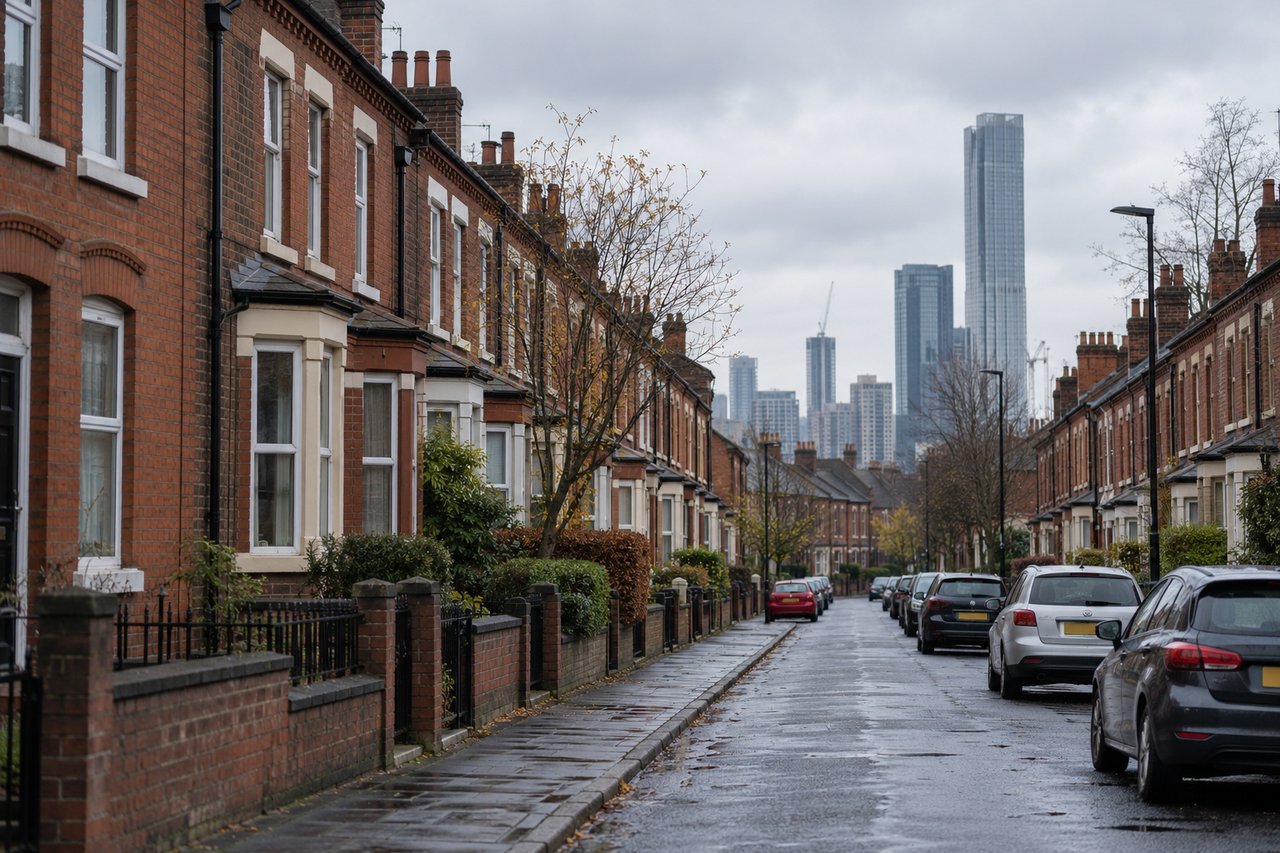
EPC C landlords Manchester run the biggest rental market in Greater Manchester, with 69,403 private rented households at the 2021 Census. This page sets out local licensing zones, the grant on offer, rent and price figures, and what the £10,000 cap may mean for flats, terraces and semis in the city.
Last checked: 22 October 2026. The EPC C by 2030 rule is confirmed government policy, not yet law. Legislation is targeted for 2027.
Private rented homes Manchester: the Census 2021 picture
Manchester has the highest share of private renting in Greater Manchester. In Census 2021, 32.3% of households rented privately, up from 28.4% in 2011 (ONS, Census area changes). That is a rise of 3.9 percentage points.
The Greater Manchester Combined Authority (GMCA) counts 69,403 private rented households (April 2023 briefing). It calculates growth of about 19% since 2011, the smallest rise in the city region. Salford, next door, grew by 59%.
Methods differ. The council puts the city at roughly 100,000 private rented properties, about 40% of its housing. That is the council's own estimate, not a Census count.
Manchester selective licensing: zones, homes and penalties
Manchester licenses private rented homes in targeted zones, not across the whole city. The council says its schemes covered about 2,000 properties, with a further 1,900 proposed.
Landlord Today reported on 26 February 2025 that 1,863 more homes joined six areas, using council figures:
- Longsight: 679 homes around Heathcote Road, Sanby Road and Northmoor Road.
- Cheetham: 405 homes, including flats above shops, Esmond and Avondale.
- Miles Platting and Newton Heath: 373 homes near Droylsden Road and Scotland Street.
- Crumpsall (147), Moss Side (143) and Harpurhey (116) complete the list.
Letting without a licence in a zone can bring an unlimited court fine or a council penalty of up to £40,000. Licence conditions include gas and electrical safety checks and fitted smoke alarms. Fee amounts are set per scheme, so check the council's fee page.
Manchester landlord grants: Warm Homes Local Grant
Warm Homes Local Grant Manchester applications run through the GMCA Retrofit Portal. We found no separate city-run landlord grant on the council pages we read.
A landlord's first property can receive up to £30,000. Later properties receive 50%, up to £15,000. The home must be rated D or E, and the tenant household must meet an income or benefit test.
The landlord must support the Good Landlord Charter. Manchester City Council says it was among the first supporters. The Charter sets 21 standards across seven areas, and joining is free. Our Warm Homes Local Grant guide covers the steps. Our Good Landlord Charter guide explains joining.
Housing stock in Manchester: three home types, three plans
Census 2021 shows 214,730 households (Manchester City Council summary). Semi-detached homes are 32%, purpose-built flats 28% and terraces about 28%. Mains gas heats 67% of homes, down from 74% in 2011. Electric heating rose from 15% to 18%.
The plans below are our analysis. An assessor confirms what applies to each property.
Purpose-built flats
Flats are the second-largest group, and many landlords here do not own the roof or walls. Draught-proofing, heating controls and lighting sit within your own front door. Anything touching the structure needs the freeholder's consent. Government policy gives a five-year exemption if consent is refused.
Terraced houses
About 60,000 households live in terraces. Older terraces often have solid walls, so insulating them needs a damp check first. Loft insulation and draught-proofing usually come before wall work.
Semi-detached and electrically heated homes
Many semis have cavity walls and lofts, which are common first measures. For the 18% on electric heating, the grant covers high heat retention storage heaters and heat pumps, but not boilers.
What the £10,000 cap means for EPC C landlords Manchester
This section is our analysis. We set official rent and price figures against the cap.
| Measure | Manchester figure | Source and date |
|---|---|---|
| Average private rent | £1,373 a month, up 4.2% in a year | ONS, August 2026 |
| Average house price | £252,000, up 1.2% in a year | ONS, July 2026 (provisional) |
| Cap in months of average rent | About 7.3 months | Our calculation |
| Cap as share of average price | About 4.0% | Our calculation |
The cap is high relative to rent here, so a landlord with a D-rated flat is unlikely to hit it on cheap measures. The price adjustment applies only to homes valued under £100,000, which is far below the city average. Spend since 1 October 2025 and grant money both count towards the cap. Read our cost cap and exemptions guide.
A Manchester case study
A semi-detached home in Levenshulme moved from EPC G to EPC C. We fitted cavity wall insulation, loft insulation, ventilation and first-time central heating.
Manchester neighbourhood guides
Area guides follow.
- South Manchester (Withington, Didsbury West, Old Moat)
- Inner south Manchester (Rusholme, Longsight, Ardwick)
- South east Manchester (Levenshulme, Gorton and Abbey Hey)
- North Manchester (Cheetham, Crumpsall)
- Whalley Range and Hulme
Who delivers the work
Compliant Lets is a trading name of LAMTANS Holdings Ltd. LAMTANS Engineering Ltd delivers the work and holds PAS 2030 and PAS 2035. Check the registers yourself: TrustMark, RECC, ICO, Gas Safe Register and Simply Certification.
Sources
- ONS: Census area changes, Manchester, checked 21 October 2026
- GMCA: Census 2021 housing tenure briefing, April 2023, checked 21 October 2026
- Manchester City Council: Census 2021 housing summary, checked 21 October 2026
- Manchester City Council: Why we are considering selective licensing, checked 21 October 2026
- Landlord Today: Manchester licensing scheme expands, 26 February 2025, checked 21 October 2026
- Manchester City Council: The Good Landlord Charter, checked 21 October 2026
- GMCA: Warm Homes Local Grant, privately rented scheme, checked 21 October 2026
- ONS: Housing prices in Manchester, checked 21 October 2026
- GOV.UK: Improving the energy performance of privately rented homes, government response, checked 21 October 2026
- Propertymark: Licensing expands as penalties increase under the Renters' Rights Act, checked 22 October 2026
How do I raise my rental to EPC C without overspending?
The free assessment ranks measures by cost against the points they add, so the cheapest route to C comes first. Grants can pay part of the cost. Read our guide to improving a rental EPC.
What warranties and workmanship guarantees come with the work?
Each measure carries a workmanship guarantee and the product warranty, and both are set out in your quote before you commit.
Do you lodge the EPC before and after the work?
Yes. We lodge an EPC on the public register before the work and another after it.
Designed & developed by LAMTANS Technologies LLC, USA — part of the LAMTANS Group
Frequently asked questions
Is my Manchester rental in a selective licensing zone?
Only if it sits in a designated area. The council lists streets for each zone, including parts of Longsight, Cheetham and Moss Side. Check the street list before you let, because zones are drawn street by street.
Do flats above shops in Cheetham need a licence?
Cheetham is one of the six areas added in February 2025, and its 405 homes include flats above shops. Check the council's street list for your address before assuming either way.
Does electric heating change my plan?
It can. Around 18% of Manchester households heat with electricity. The grant funds heat pumps and high heat retention storage heaters, not boilers, so a heating measure may be possible where gas is absent.
Can I claim for several flats in one block?
The first property can be fully funded and later ones receive 50%. Each flat is assessed on its own EPC and its own tenant household. The freeholder must agree to any work on shared structure.
Do rising rents raise my cost cap?
No. The cap is set per property in government policy, not by rent. The only value test applies to homes worth under £100,000, where the cap is the lower of £10,000 or 10% of value.
What if my freeholder refuses consent?
Government policy provides an exemption when third-party consent is refused, typically for five years, and it goes on the exemptions register. You need written evidence of the refusal. The rule is policy, not yet law.